For years, I have been presenting recreational boating safety programs to boating, sailing and paddling clubs during meetings, symposia, picnics, training, on-water trips and other events. While these have not been official America’s Boating Club | United States Power Squadrons-sanctioned events and did not earn me merit marks, I enjoyed this work regardless and felt it was important to bring recreational boating safety to boaters, especially the paddling community.
During the COVID-19 pandemic, when many of us avoided public meetings and large groups, then-Chief Commander Mary Paige Abbott sent a letter to the membership suggesting things we might do to keep busy during this time. One thing she mentioned was to consider becoming a vessel examiner to do vessel safety checks in the future.
Up until this time I had been uninterested in becoming a vessel examiner; I envisioned myself sitting at a boat ramp with other squadron members trying to offer free safety checks to boaters who would rather we get out of their way so they could go on about their business. Just the same, I decided to become a certified vessel examiner anyway.
I’m happy to report that if I knew then what I know now about the VSC program, I would have become an examiner years earlier.
I had no idea of the things I could do with this program, and my vision of being ignored at a boat ramp never happened. One thing I like about this program is that it has allowed me to be a satellite operation bringing safe boating education to the paddling community. I present short training programs about various subjects important to paddlers such as marine VHF, navigation, personal flotation devices and safety equipment. I also offer VSCs, which go toward earning a merit mark while advertising the benefits of our organization’s educational programs.
National Safe Boating Week
Each year, National Safe Boating Week runs the full week leading up to Memorial Day weekend to promote recreational boating safety throughout the boating season. This year, it’s scheduled for May 16–22. During this week many boating safety organizations, including America’s Boating Club | United States Power Squadrons, schedule events to promote boating safety and education. This week will mark the third year that I will use the VSC program to promote boating safety education to paddlers through my club, the Kayak Adventure Group.
Vessel safety checks
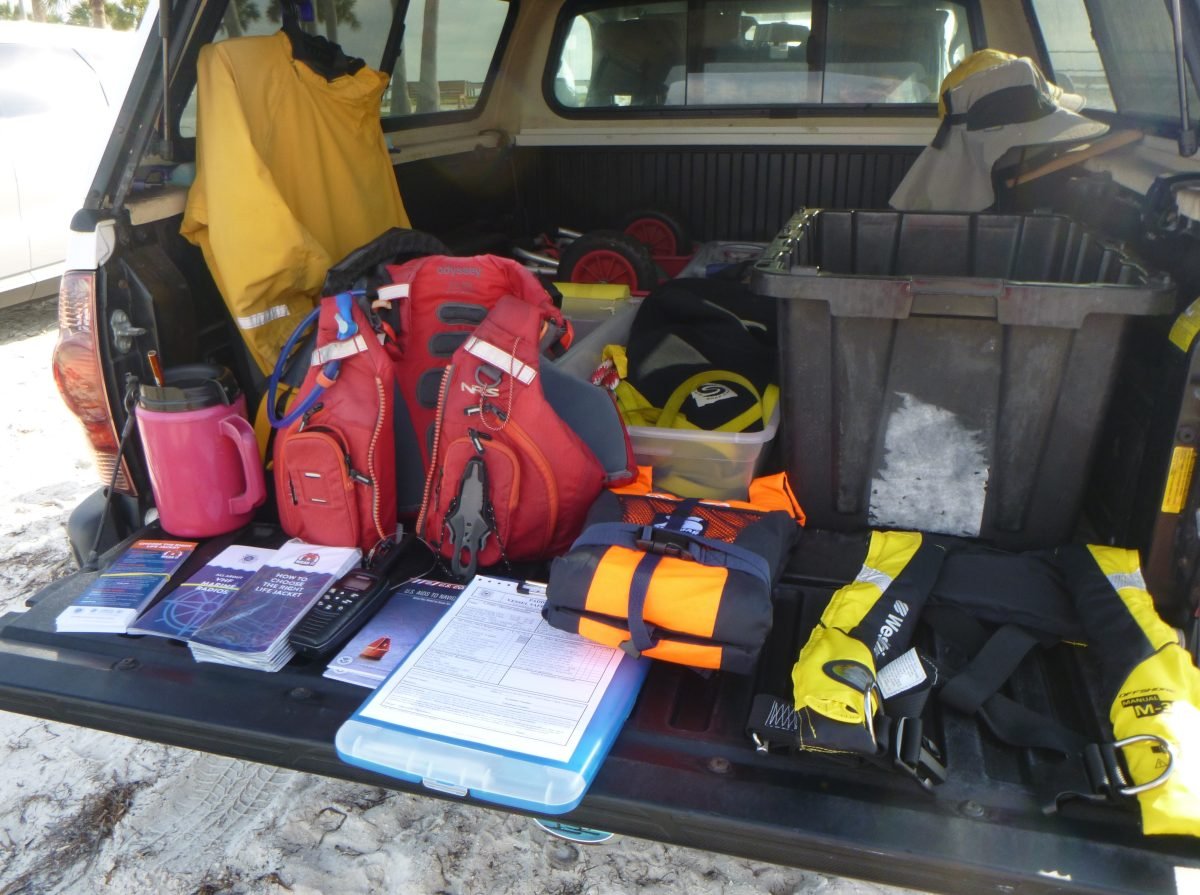
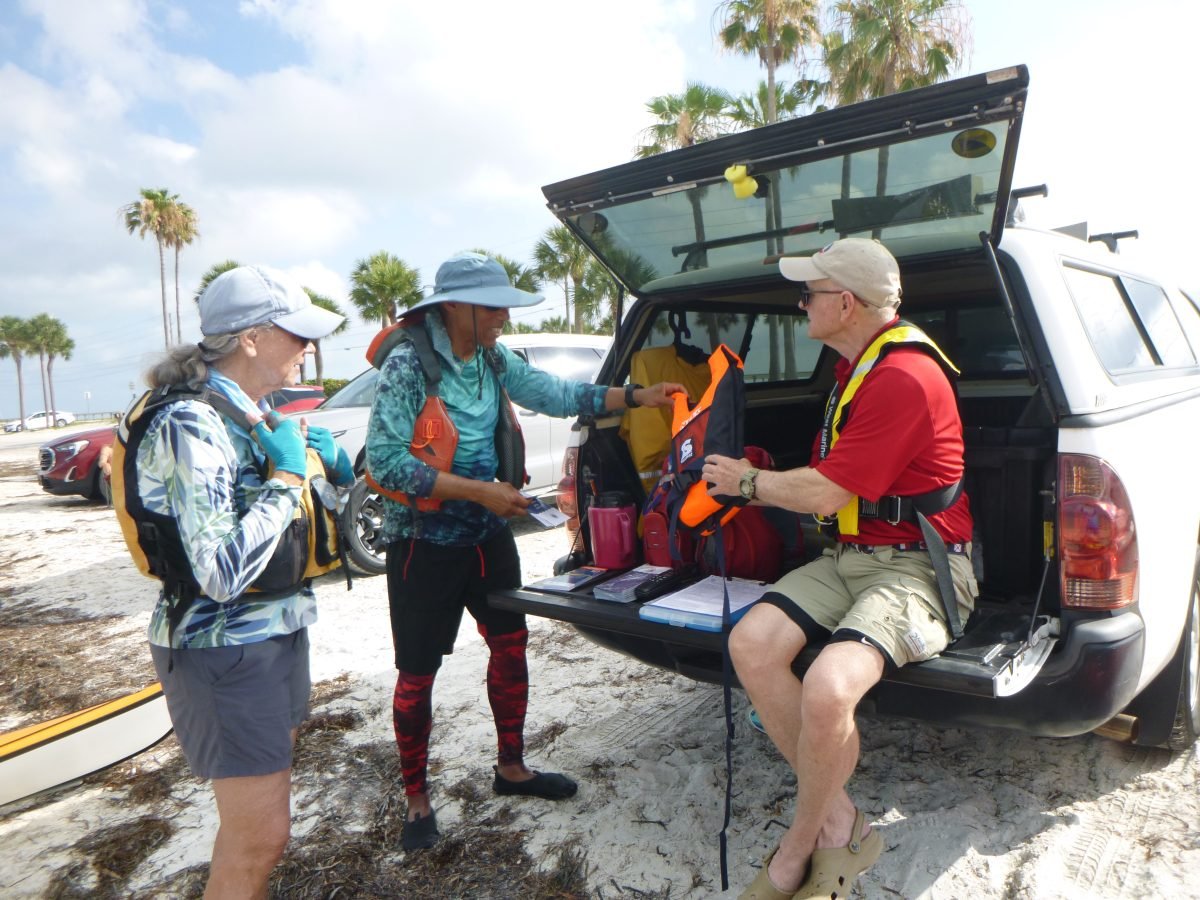
When planning a VSC education program for a group, I send out a notice containing the date, time and location. The notice briefly explains what the VSC program is, how it works and how the education will benefit participants. I also request an RSVP so I know how many supplies to have on hand. Besides the VSC forms and decals, I bring complimentary boating safety handouts from the National Safe Boating Council, U.S. Coast Guard vessel identification stickers and paddle reflectors, and whistles produced by Tampa Power Squadron and the Florida Paddling Trails Association.
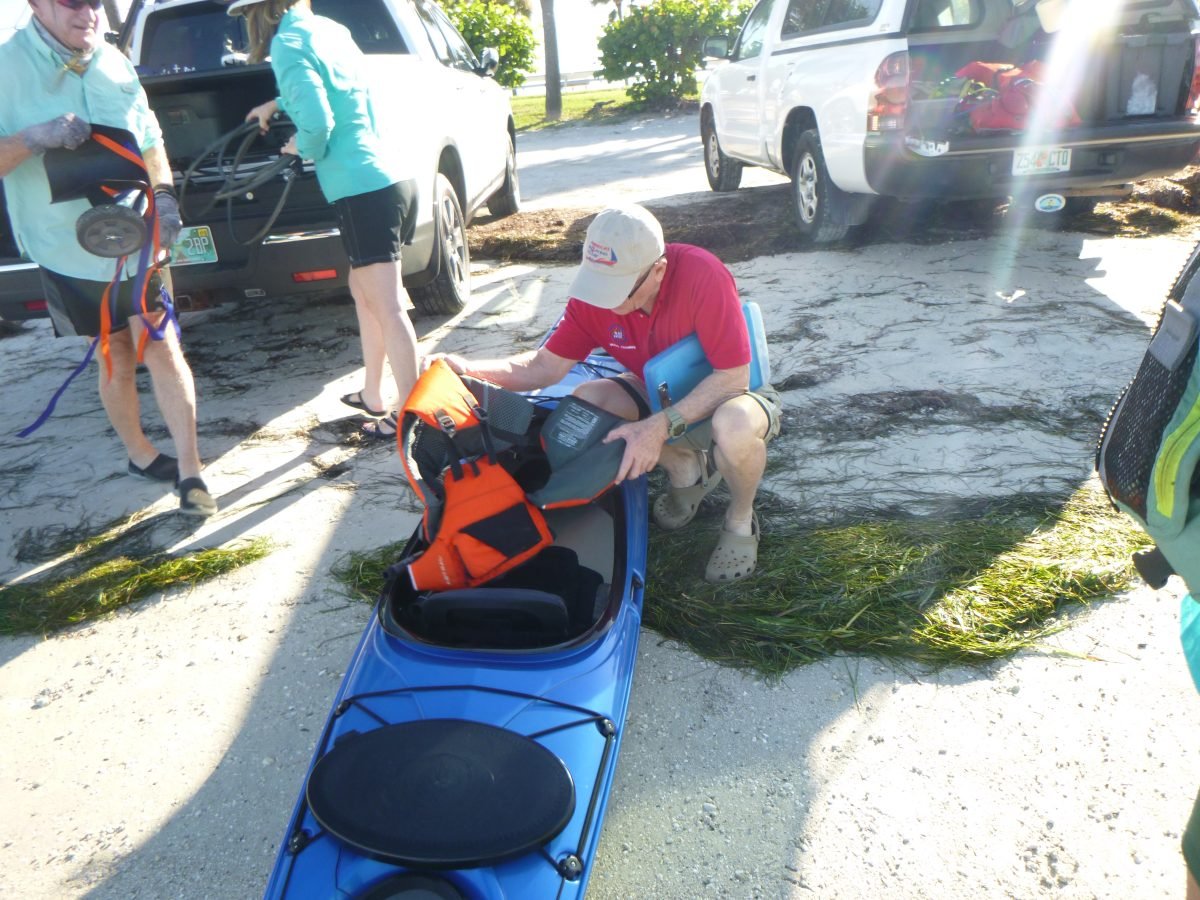
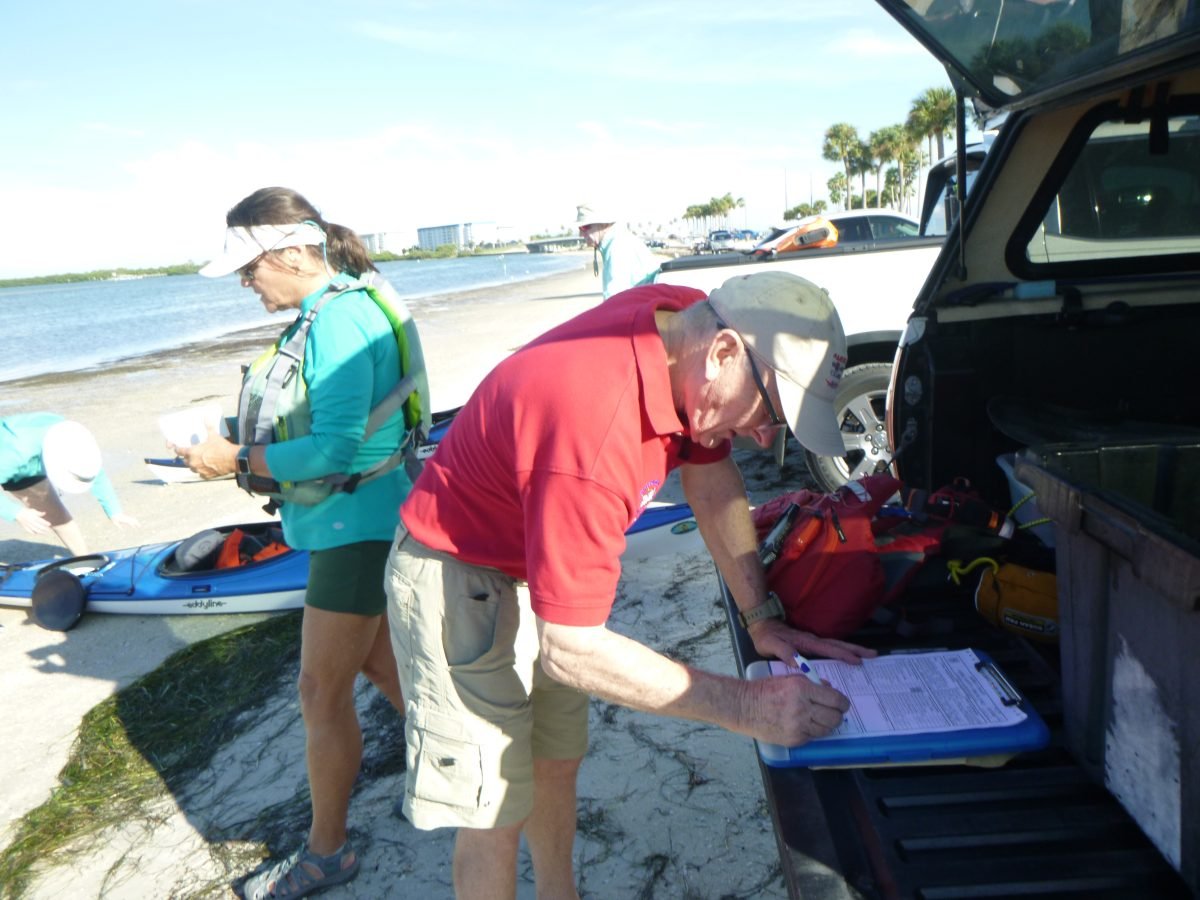
The VSC program begins on the beach where I wear the vessel examiner uniform. I start all my programs by emphasizing that a paddlecraft is a vessel and that the paddler in charge is the operator and thus should have a working knowledge of the regulations that apply to all vessel operators. If the program is strictly about paddlecraft, I use the Paddle Craft Vessel Safety Check form 7012A as the outline. Presenters focusing on vessels other than paddlecraft would use the regular 7012 VSC form. With paddlecraft, I discuss the basic requirements, which include a USCG-approved PFD and a whistle as a sound device. Paddlers operating at night must also carry a white flashlight or other approved navigation lights and visual distress signals if operating in open water.
The rest of the program covers recommended equipment as listed on the VSC form and any additional information that I might have. For example, in 2025 we saw changes in approved PFDs that would be available to paddlers, including USCG approval of Level 50 PFDs and inflatable PFDs for children. Of course, I encourage questions and discussion.
Afterward, I perform VSCs on the beach for those interested while the others prepare their boats and equipment for the water. Once the beach program is over and the VSCs are complete, we go out on the water for a training session.
On the water, we regularly practice rescues as a group, as on occasion we need to respond to a capsize. We practice wet exits (getting out of a kayak safely when capsized) and various types of self and assisted rescues including rolling. We also practice bracing to prevent capsizing, towing a boat or a swimmer, and various scenarios that could occur while on the water. While Kayak Adventure Group is a sea kayaking group, I occasionally invite paddlers with standup paddleboards and recreational kayaks to these sessions. These two types of vessels are now the fastest growing segment of paddle sports, and boating safety education has become a priority.
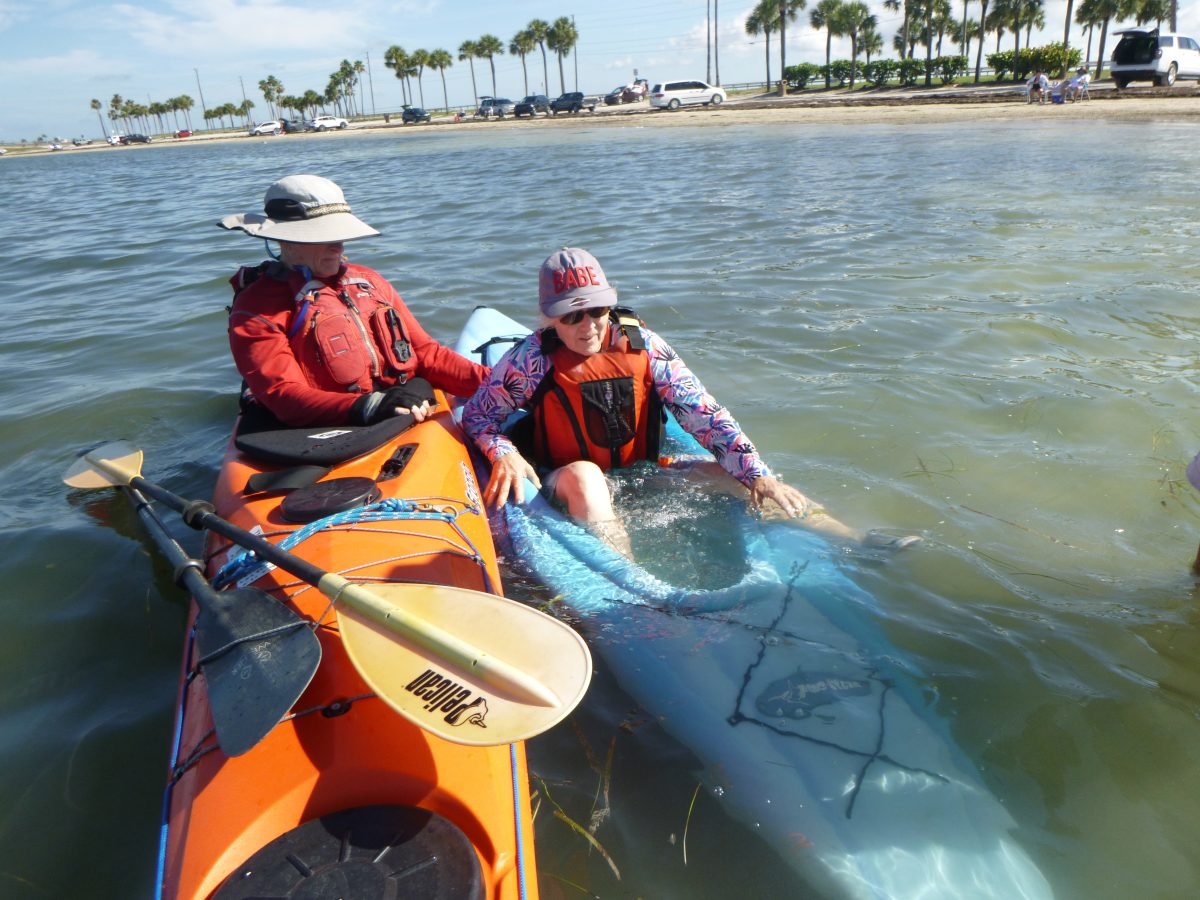
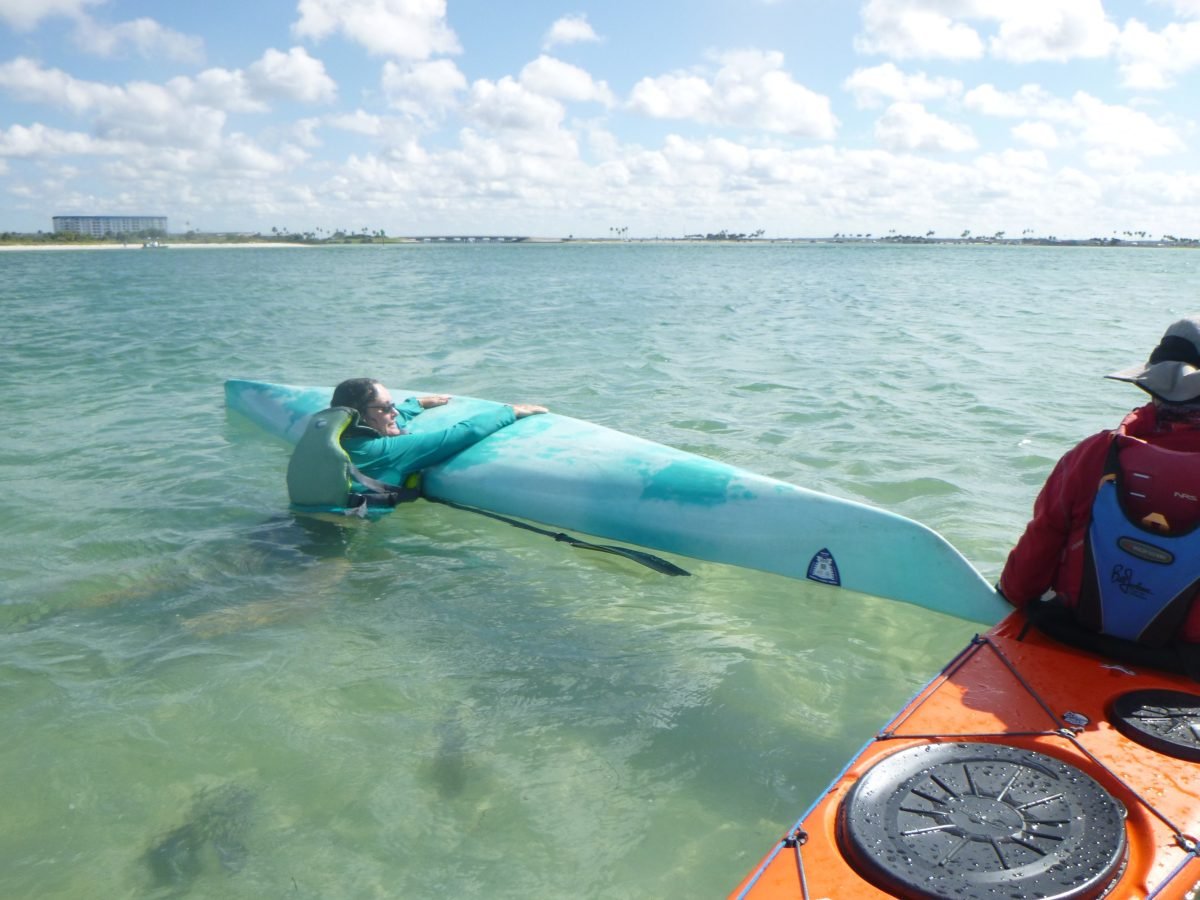
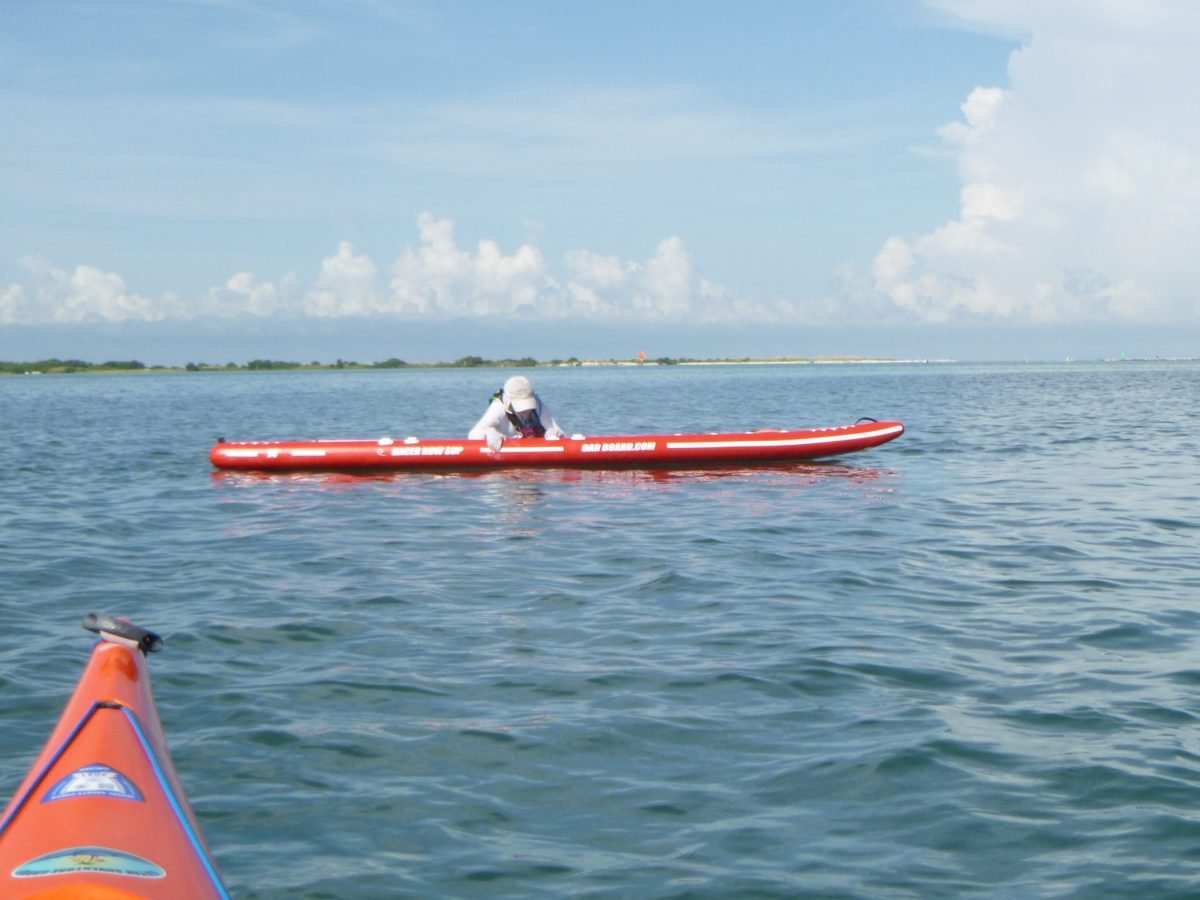
I use these sessions for research and photography for future articles for The Ensign and educational projects involving America’s Boating Club | United States Power Squadrons and other boating safety organizations.
I plan to continue putting on an annual VSC and boating education program for groups during National Safe Boating Week. In the future I hope to expand this effort by reaching out to other paddle sport groups to include recreational kayaks and standup paddleboards. Any squadron, instructor or vessel examiner can host such events, or they can be organized through yacht clubs, Meetup groups or other boating organizations. We can all take boating safety education to interested citizens and perhaps find new leads for members.
I have enjoyed becoming a vessel examiner, as it has opened a new avenue of bringing recreational boating safety to the public and becoming regularly involved in National Safe Boating Week. I can now take recreational boating safety directly to the paddle sports community while completing work to earn a merit mark. We need more vessel examiners and instructors to continue this effort, so I encourage you to become an examiner or instructor. As we approach National Safe Boating Week this year, please consider employing a similar boating safety program in your area.